 Aogebio Cosmetic
1 / 3
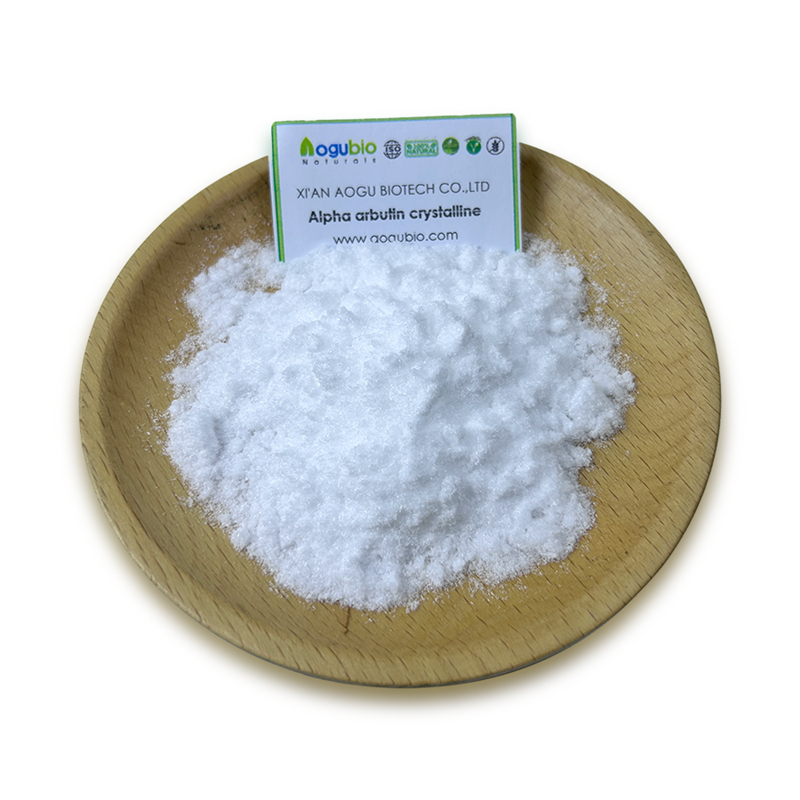
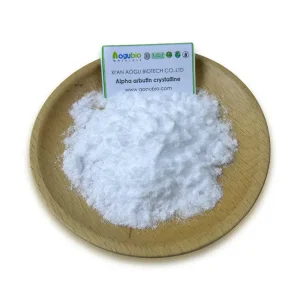
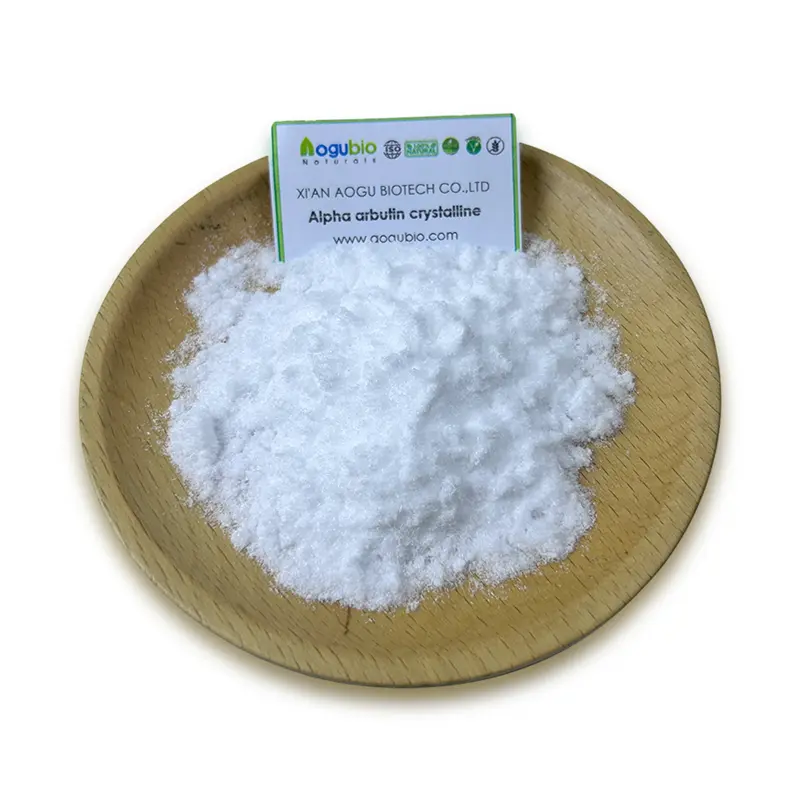
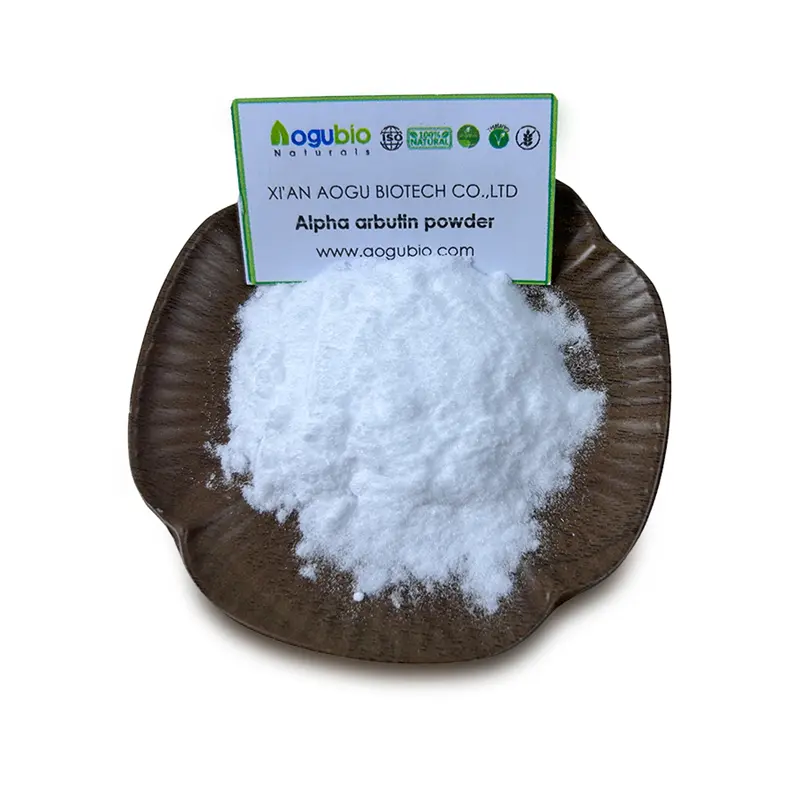
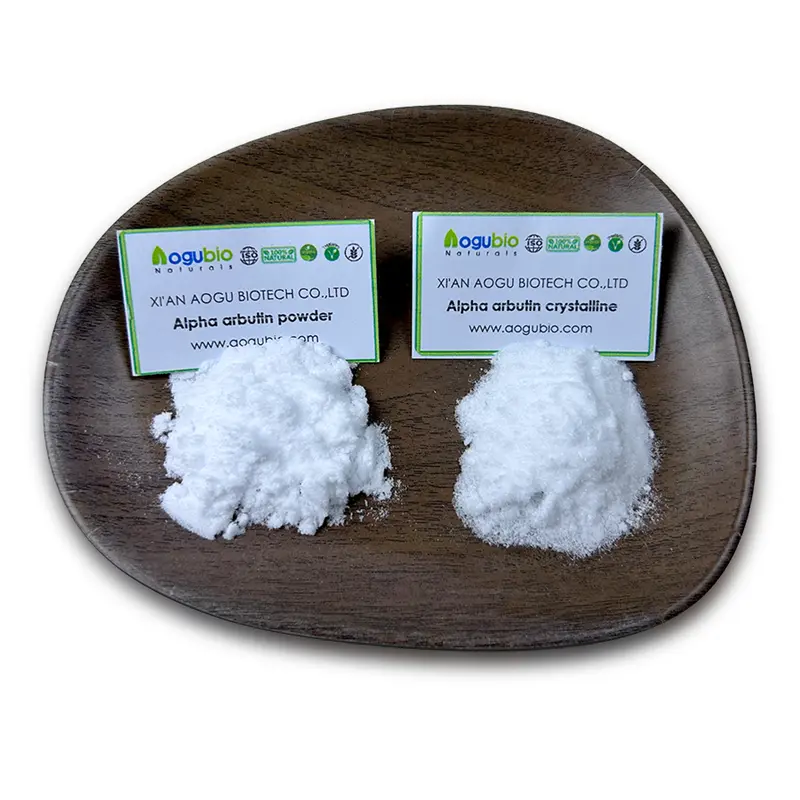
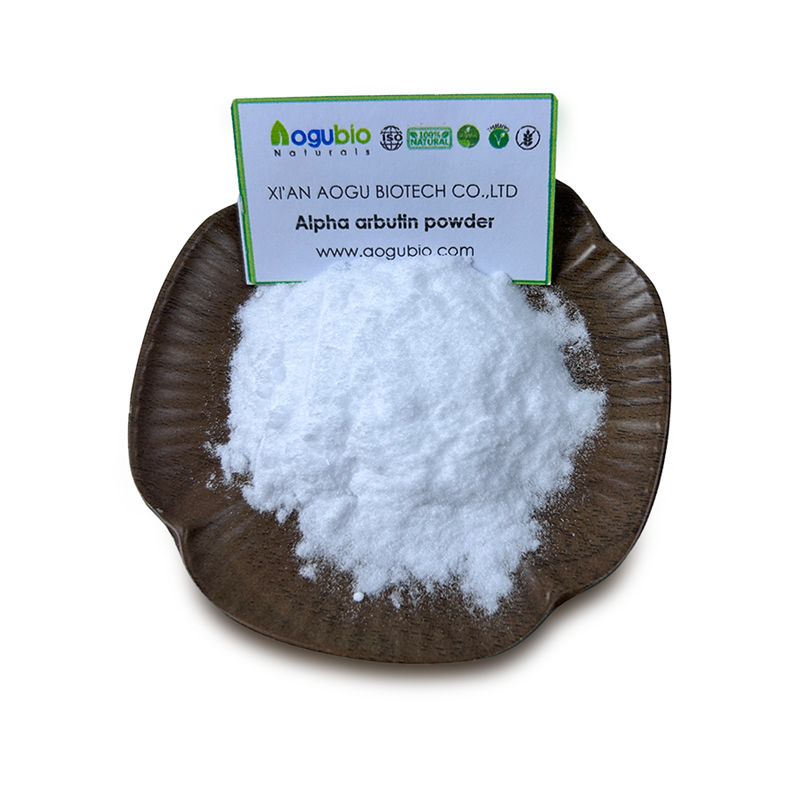
Alpha-Arbutin is a naturally occurring derivative of hydroquinone, found in various plants such as bearberry, blueberry, and cranberry. It is a stable form of arbutin that is known for its skin-brightening properties. Alpha-Arbutin works by inhibiting the enzyme tyrosinase, which is involved in the production of melanin, thereby reducing hyperpigmentation and promoting an even skin tone.
It is a more stable and less toxic alternative to hydroquinone in skin lightening applications. The molecule consists of a hydroquinone moiety linked to a glucose unit. It works by inhibiting the enzyme tyrosinase, which is involved in the synthesis of melanin (the pigment responsible for skin coloration). By reducing tyrosinase activity, it can prevent the formation of excessive melanin, thus having a skin lightening or depigmentation effect.
It effectively reduces the appearance of dark spots, age spots, and hyperpigmentation, leading to a more even skin tone. This makes it a popular ingredient in anti-aging and brightening skin care products.
It can act as an antioxidant, protecting the skin from damage caused by free radicals. This helps in preventing premature aging of the skin, such as the formation of fine lines and wrinkles.
Compared to hydroquinone, alpha-arbutin is less likely to cause skin irritation, making it suitable for a wider range of skin types, including sensitive skin.
In Cosmetics: It is commonly used in facial creams, serums, lotions, and masks. The concentration of alpha-arbutin in these products can range from 0.5% to 2% depending on the formulation and the intended effect.
In Pharmaceuticals: It may be used in topical medications for the treatment of skin pigmentation disorders such as melasma and post-inflammatory hyperpigmentation.
Used in formulations aimed at reducing dark spots, melasma, and overall skin discoloration.
Helps improve skin texture and tone, contributing to a more youthful appearance.
Often included in professional treatments for pigmentation issues.

Closed container, dry place, room temp

Not animal tested

No animal-derived components

No data available