 Aogebio Cosmetic
1 / 1
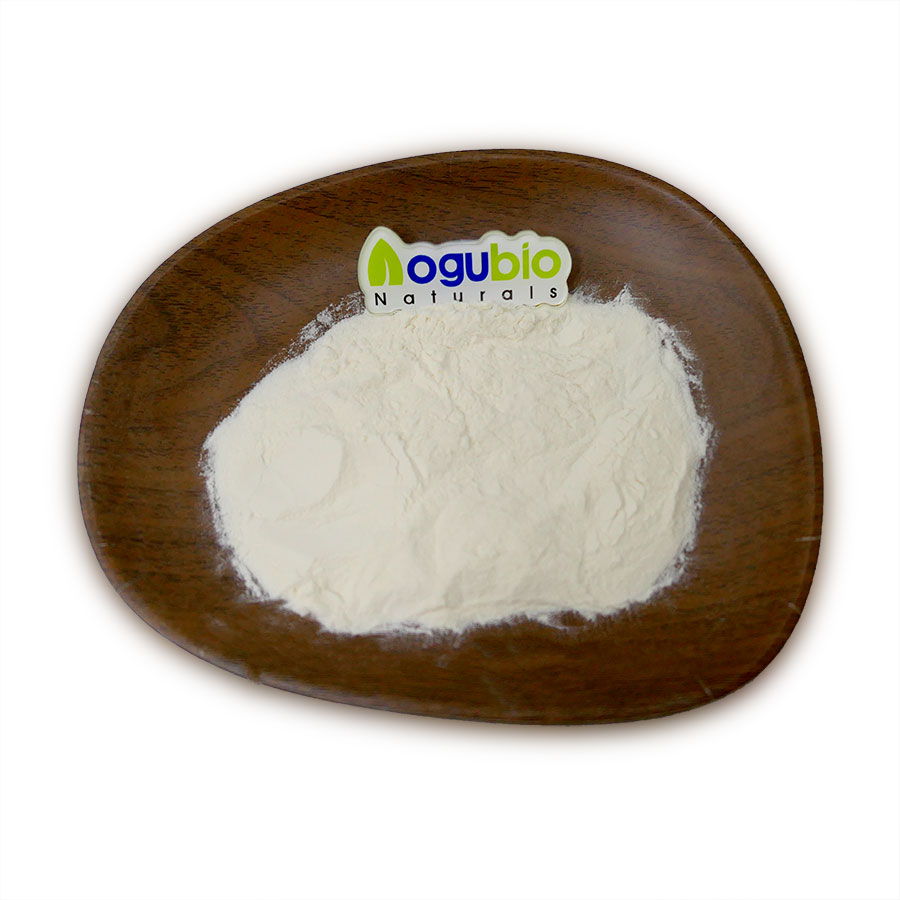
Glutamylamidoethyl Imidazole is a highly specific and potent skin brightening agent that functions through a unique mechanism of action, primarily as a tyrosinase inactivation agent.
Competitive Tyrosinase Inactivation (Copper-Ion Chelation):
Unlike many other brighteners that compete with tyrosine for the enzyme's active site, Glutamylamidoethyl Imidazole directly targets the copper ions located at the catalytic core of the tyrosinase enzyme.
Its molecular structure contains imidazole and amide groups that have a strong affinity for copper ions. It forms a stable complex with these ions, effectively rendering the tyrosinase enzyme inactive. This mechanism directly inhibits the conversion of L-tyrosine to L-DOPA and subsequently to dopaquinone, the critical first steps in the melanin synthesis pathway.
Supersedes Traditional Inhibitors: This mode of action is considered more direct and efficient than many traditional ingredients (like arbutin or kojic acid) that act as substrate analogues. By chelating copper, it "switches off" the enzyme itself.
Demonstrates exceptionally strong dose-dependent inhibition of mushroom and human tyrosinase. Its IC50 value is significantly lower than many reference standards, confirming superior efficacy.
Treatment with Glutamylamidoethyl Imidazole leads to a dramatic reduction in intracellular melanin content without inducing cytotoxicity, even at effective concentrations.
Shows additional benefits in inhibiting Advanced Glycation End-products (AGEs), which can contribute to aged and sallow-looking skin, thereby promoting a brighter complexion.
Clinical studies on formulations containing 1-3% Glutamylamidoethyl Imidazole validate its in-vivo efficacy and tolerance.
Study Design: 12-week, double-blind study with female volunteers exhibiting hyperpigmentation (solar lentigos, melasma, PIH).
Non-cytotoxic, non-irritating active designed for safe, long-term use. No risks associated with harsh inhibitors like hydroquinone.
Effective across a wide pH range (4.0 - 7.0), making it highly versatile for various formulations.
Synergistic with Niacinamide, Vitamin C, Kojic Acid, Alpha-Arbutin. High thermal and pH stability.
Recommended Usage Level: 1% - 3% in the final product.
Suggested Formulations:

Inactivates tyrosinase by chelating copper ions at the source.
Significant reduction in dark spots, melasma, and PIH.

Gentle and non-irritating, suitable for all skin types.
Stable, water-soluble, and effective at near-neutral pH.

Store in a closed container at a dry place at room temperature.

Not animal tested

Does not contain animal-derived components

No GMO data available
A: It works by chelating copper ions at the catalytic core of the tyrosinase enzyme, effectively inactivating it and stopping melanin production at the source.
A: Yes, it is a non-cytotoxic and non-irritating alternative, making it suitable for long-term use without the harsh side effects associated with hydroquinone.
A: The suggested usage level is between 1% and 3% in final products such as serums, creams, and lotions.
A: Absolutely. It is highly compatible and often synergistic with Niacinamide, Vitamin C, Kojic Acid, and Alpha-Arbutin for a multi-targeted approach.
A: Clinical studies have shown excellent tolerance even in subjects with sensitive skin, with no reports of redness or irritation.
A: It should be stored in a closed container in a dry place at room temperature to maintain its high thermal and pH stability.