Engineered for absolute compatibility with local ingredients such as Marula Oil and Kalahari Melon Seed Oil. These thickeners ensure premium sensory profiles under high ambient temperatures.
Namibia's cosmetic sector is experiencing a significant paradigm shift. Driven by growing consumer demand for natural products in the Southern African Customs Union (SACU) region, local manufacturers in Windhoek, Walvis Bay, and Swakopmund are formulating high-performance skincare products. Formulating for Namibia, however, poses distinct physiological and physical challenges.
The hyper-arid Namibian climate, characterized by intense UV exposure and low humidity, demands skincare that delivers deep hydration, robust lipid replenishment, and long-lasting barrier protection. To achieve this, local formulators rely heavily on high-performance cosmetic thickeners and rheology modifiers. These ingredients do more than build viscosity; they stabilize complex emulsions containing high percentages of local botanicals like Kalahari Melon Seed Oil and indigenous Marula Oil.
Choosing the correct rheology modifier is essential for product stability, sensory feel, and overall cost-efficiency. The table below outlines key technical specifications of synthetic versus natural thickeners in cosmetic formulations.
| Thickener Class | Key Representative Product | Viscosity Profile (cPs at 1% Sol.) | Optimal pH Range | Thermal Stability | Best Application |
|---|---|---|---|---|---|
| Synthetic Polymers | Carbomer 940 / Carbomer 980 | 40,000 - 60,000 | 5.0 - 10.0 | Excellent up to 75°C | Clear Gels, High-viscosity Creams |
| Cellulose Derivatives | HPMC / HE-Cellulose | 3,000 - 10,000 | 3.0 - 11.0 | Moderate (thermo-reversible) | Hair Care, Shampoos, Liquid Soaps |
| Natural Polysaccharides | Cationic Guar Gum / HP Starch | 1,500 - 5,000 | 4.0 - 9.0 | Good in warm processes | Clean-beauty Emulsions, Conditioners |
| Mineral Thickeners | Bentonite Clay / Hectorite Gel | Thixotropic Flow | 2.0 - 13.0 | Outstanding | Mineral Sunscreens, Heavy Pomades |
Traditional carbomers (e.g., Carbomer 940, Carbomer 980) and acrylate copolymers represent the industry gold standard for crystal-clear gel formulations. They deliver exceptional suspending power, enabling formulators to suspend active ingredients, exfoliants, or decorative beads without settling.
For eco-certified or clean-beauty product lines targeting premium Namibian resorts and international export markets, natural polymers like Guar Gum and Hectorite Gel provide robust suspension and viscosity profiles without synthetic microplastic concerns.
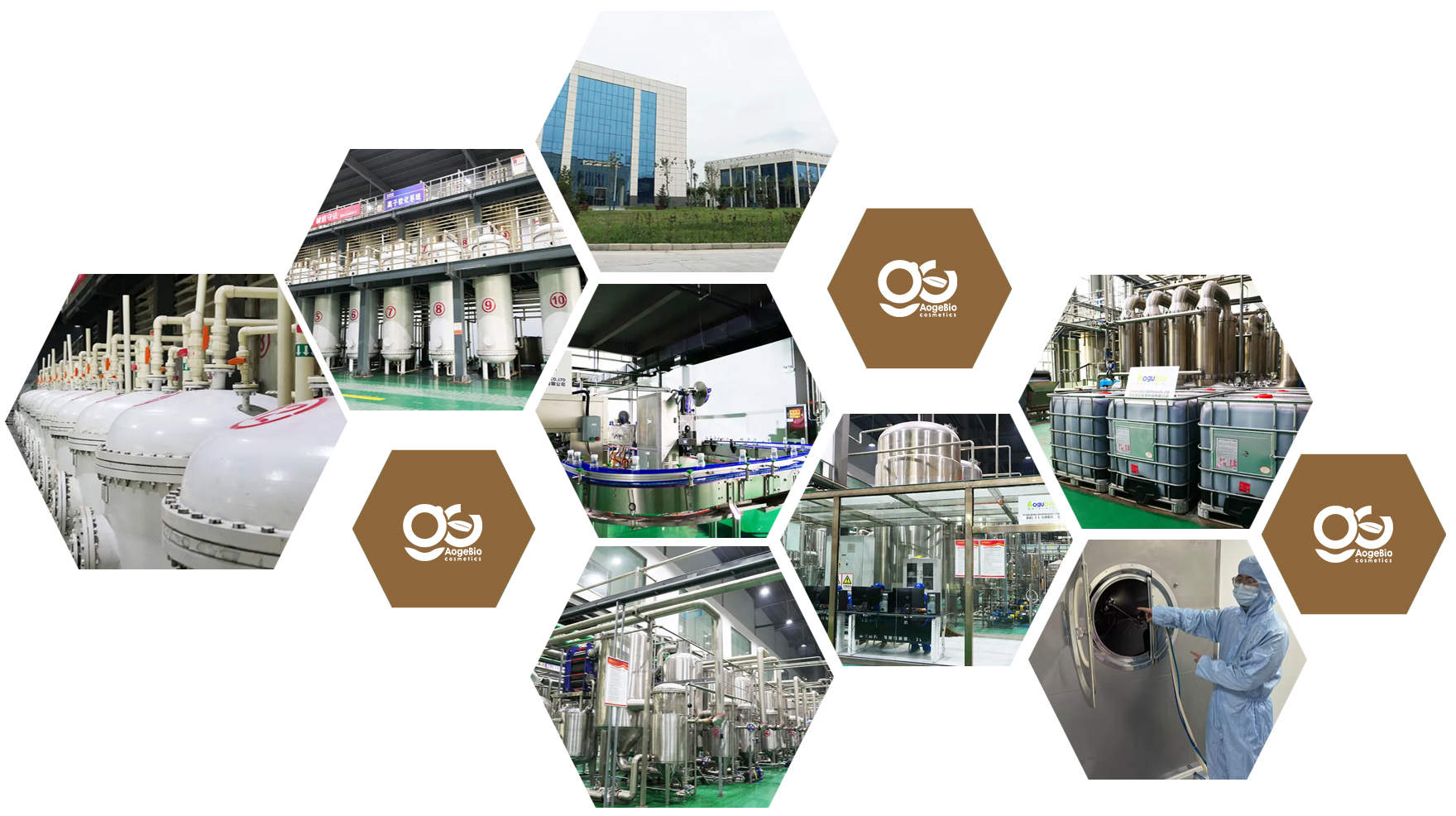
Headquartered in the high-tech zone of Xi'an, along with our subsidiaries Imaherb Biotech and Nahanutri Biotech, Aogebio is a leading force in cosmetic raw materials. Our state-of-the-art facilities guarantee high batch-to-batch consistency and competitive pricing for the Namibian market.
At Aogebio, we prioritize batch-to-batch consistency. Our in-house quality control laboratory utilizes advanced analytical instrumentation, including UPLC, HPLC, GC-MS, and ICP-MS. This ensures that every shipment of thickener, surfactant, or bioactive extract conforms strictly to international standards, including EU Cosmetics Regulation (EC) No 1223/2009.
For cosmetics manufacturers in Windhoek or Walvis Bay, sourcing raw materials directly from China has never been more efficient. We provide optimized logistics routes from China’s major ports (such as Qingdao, Shanghai, and Ningbo) directly to the Port of Walvis Bay. This minimizes transit times and helps you maintain lean, cost-efficient manufacturing operations.
Importing cosmetic raw materials into Namibia requires navigating key regional standards. We provide full compliance documentation to ensure a seamless import process.
Namibia aligns its regulatory frameworks closely with the South African Bureau of Standards (SABS) and the Namibian Standards Institution (NSI). When purchasing chemical thickeners, emulsifiers, or preservatives, ensuring compliance with the South African National Standard (SANS 10234) for chemical classification is critical. Aogebio assists you by providing correctly formatted, GHS-compliant Safety Data Sheets (SDS) and clear product labeling.
Due to the maritime shipping route and the high humidity levels at the Walvis Bay port, we pack our powdered cosmetic thickeners (such as HPMC, Carbomers, and Guar Gum) in high-strength, moisture-resistant packaging. This typically includes multi-layer Kraft paper bags with internal PE linings or sealed plastic drums. This packaging ensures your products arrive dry, free of agglomeration, and ready for production.
Explore our selection of synthetic, natural, and mineral-based rheology modifiers, designed to support diverse cosmetic applications from lightweight serums to rich creams.
Review answers to technical questions about selecting, processing, and importing cosmetic raw materials.
Both Carbomer 940 and Carbomer 980 are high molecular weight cross-linked polyacrylic acid polymers used as rheology modifiers. The primary difference lies in the polymerization solvent used during synthesis. Carbomer 940 is traditionally synthesized in benzene, whereas Carbomer 980 is polymerized in a toxicologically safer solvent mixture (typically cosolvents like ethyl acetate and cyclohexane).
In terms of formulation performance, Carbomer 980 offers similar viscosity levels (40,000 to 60,000 cPs at 0.5% concentration) and clarity, but provides a slightly better shear resistance and is preferred for modern cosmetic formulations where low toxicity and regulatory compliance are essential.
Natural polysaccharides like Cationic Guar Gum or Hydroxypropyl (HP) Starch generally exhibit better electrolyte compatibility than synthetic Carbomers. Carbomers rely on carboxylate ions along the polymer backbone to swell. When electrolytes (such as sodium chloride, botanical extracts, or active salts like Aloe Vera) are introduced, they shield these charges, causing the polymer chain to collapse and lose viscosity.
Guar Gum and its derivatives build viscosity through hydrogen bonding with water molecules, making them far more resistant to electrolytes. They are suitable for formulations containing high botanical extract ratios or mineral-rich clays.
For formulations exposed to high ambient temperatures, mineral thickeners such as Bentonite Clay or Hectorite Gel are highly recommended. These inorganic clays form a thixotropic card-house gel structure that remains stable at temperatures exceeding 75°C.
Additionally, combining synthetic polymers like Acrylates Copolymer with natural co-thickeners like HPMC provides a robust emulsion network. This network prevents phase separation under thermal stress by stabilizing both the oil and water phases.
We provide complete shipping and compliance documentation packages, including:
Upon request, we can also provide Technical Data Sheets (TDS) and custom declaration documents to help ensure smooth customs clearance through the Namibian Customs and Excise authorities.
Hydroxypropyl Methylcellulose (HPMC) and Hydroxyethyl Cellulose (HEC) dissolve differently depending on water temperature. HPMC is insoluble in hot water; it is typically dispersed in hot water (around 70°C to 80°C) to wet the particles without lumping, and then dissolved as the water cools down under agitation.
In contrast, HEC disperses easily in cold water if it has been surface-treated for delayed hydration, dissolving as the pH is adjusted upward (usually to pH 8.0 or higher with a neutralizer). For energy-efficient manufacturing in Namibia, cold-processable polymers help reduce production costs and cycles.
 Aogebio Cosmetic