What Are Cosmetic Emulsifiers and How Do They Work?

Time:2026-11-02 Author:Henry
0%

Oil and water resist each other. In a lotion, tiny oil droplets can separate, rise, and leave an uneven layer on the surface. Cosmetic Emulsifiers help disperse those droplets through water, creating a mixture that feels smooth and stays usable. They do not make every formula stable by themselves. Ingredient choice, proportions, temperature, and mixing all matter.

Cosmetic chemist Perry Romanowski has explained this principle in practical terms. A concise paraphrase of his point is: “An emulsifier helps oil and water remain dispersed.” That simple idea leads to useful questions: How does an emulsifier gather at the boundary between oil and water? What distinguishes oil-in-water from water-in-oil formulas? And why can a cream still separate after careful mixing? There is no perfect shortcut. A glossy texture can look convincing while hiding instability, so formulators assess appearance, feel, and performance over time. That detail is easy to overlook.

This guide explores how emulsifiers work, how formulators select them, and what their labels can—and cannot—tell you. You will also see why a stable cream depends on the whole formula, not one “hero” ingredient. Emulsions are practical chemistry, but real batches can be stubborn.
What Are Cosmetic Emulsifiers and How Do They Work?

What Cosmetic Emulsifiers Are and Why Formulas Need Them

Cosmetic emulsifiers help oil and water stay mixed in products such as creams and lotions. Without them, droplets of oil may gather and separate from the watery portion. An emulsifier works at the boundary between the two, with parts of its molecules interacting with each phase. This helps form a more even mixture and can support a consistent texture from the first use to the last. Useful, but not magic.

The right emulsifier depends on the oils, water content, and desired feel. A light lotion and a rich cream may need different systems. Formulators also consider how ingredients behave during heating, cooling, and storage. Emulsifiers do not automatically prevent microbial growth, so product safety requires separate testing and suitable preservation.

Tips: Check a product’s texture over time, not just when it is freshly made. If you are developing a formula, change one variable at a time and record the results. Small adjustments can have surprisingly large effects. There is no single perfect formula; even careful choices may need revision after stability testing. A smooth appearance alone cannot confirm that an emulsion will remain stable.

How Emulsifiers Stabilize Oil and Water

What Are Cosmetic Emulsifiers and How Do They Work?
How Emulsifiers Stabilize Oil and Water

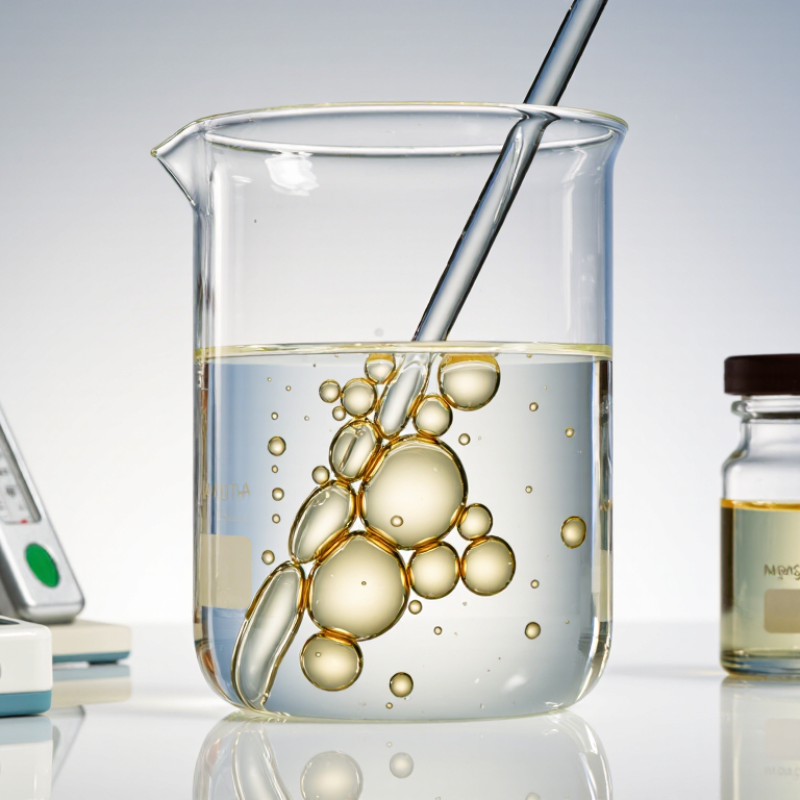
Oil and water naturally separate because their molecules interact differently. In a cosmetic cream, an emulsifier helps bring them together by positioning itself at the boundary between tiny oil droplets and surrounding water. One part of the emulsifier is attracted to water; another associates with oil. That is the interface. This arrangement lowers the tension between the phases and helps droplets form during mixing.

The droplets then remain dispersed through the product rather than quickly pooling into a shiny layer. Some emulsifiers also help create a thin protective barrier around each droplet, reducing the chance that droplets merge. Not magic. Stability still depends on the full formula, including the oil-to-water ratio, mixing method, temperature, and ingredients that affect thickness. A cream may look smooth right after blending, then separate weeks later if those factors are poorly balanced.

A useful detail is that emulsifiers do not all behave alike. Some work best in oil-rich creams, while others suit lighter, water-rich lotions. Formulators test texture and stability over time, not just appearance on the day of mixing. Even then, a stable product can change if stored in excessive heat or cold. The word “stable” has limits, and that is worth remembering.

Common Types of Emulsifiers in Cosmetic Products

Common Types of Emulsifiers in Cosmetic Products

Cosmetic emulsifiers help oil and water stay mixed instead of separating into visible layers. Nonionic types, including polysorbates and glyceryl stearate, are widely used because they can work across different formula conditions. Lecithin offers another option, while cetearyl alcohol often supports the structure of a cream rather than acting alone. Small amounts matter.

Charged emulsifiers are another group. Anionic types can help create light, rinseable textures; cationic types are often chosen for conditioning products. The right choice depends on the oil phase, pH, and desired feel—not just the ingredient name. Grand View Research valued the global emulsifiers market at about USD 9.22 billion in 2023. That figure covers multiple industries, not cosmetics alone, so it should not be read as a cosmetic-market estimate.

Formulators also consider whether a product should be oil-in-water, like a lotion that spreads easily, or water-in-oil, like a richer cream that leaves a more protective feel. HLB values can guide this choice, but they do not guarantee stability. A formula still needs testing for separation, temperature changes, and texture over time. I would question any claim that one emulsifier fits every skin-care base; real mixtures are less tidy than ingredient charts suggest.

What Are Cosmetic Emulsifiers and How Do They Work?

Common emulsifiers help oil and water mix and stay blended. Their typical HLB values offer a useful guide to the kinds of emulsions they tend to support.

How to read this chart: Higher HLB values generally favor oil-in-water (O/W) emulsions, while lower values generally favor water-in-oil (W/O) emulsions. Values shown are typical reference figures; exact values can vary by material grade and supplier.

How Emulsifiers Are Selected and Used in Formulation

What Are Cosmetic Emulsifiers and How Do They Work?

How Emulsifiers Are Selected and Used in Formulation

Selecting an emulsifier begins with the formula, not a product label. The oil phase, water phase, and intended texture all matter. A light lotion may need a different system from a rich cream. Consider the ingredients, too: salts, acids, and plant extracts can affect stability. It is tempting to choose by a single compatibility chart, but that shortcut can mislead. Small details matter.

In the lab, formulators usually add the emulsifier to the phase specified for its use. They control heating, mixing speed, and the order of addition. A rotor-stator mixer can create a finer initial dispersion, while gentler mixing may suit other systems. Exact temperatures and methods depend on the emulsifier and the formula. Record each change. Then test again.

A fresh batch is only a starting point. Check for separation, changes in viscosity, and shifts in appearance over time. Temperature cycling can reveal weaknesses that are not visible on the day of manufacture. Bench results do not always predict months on a shelf, so stability testing matters. If a formula breaks, revisit the oil load, process, or emulsifier level rather than simply adding more. That is not always the neat answer, but formulation rarely is.

Factors That Affect Emulsion Stability and Skin Compatibility

Cosmetic emulsifiers help oil and water form a uniform mixture, but stability depends on more than choosing an emulsifier. The oil-to-water ratio, emulsifier type, droplet size, and thickening agents all affect separation. Tiny droplets matter. Heat, cold, and repeated temperature changes can reveal weak spots, while salts or pH shifts may alter the emulsifier’s performance. ISO 18811:2018 provides guidance for evaluating cosmetic-product stability; test conditions should reflect how and where a product will be stored. Accelerated tests are useful, but they cannot perfectly predict every real-world change.

Skin compatibility is a separate question. A stable cream may still irritate some users. Lambers et al. reported an average skin-surface pH of about 4.7, based on measurements discussed in the International Journal of Cosmetic Science (2006). That figure is a reference, not a rule that every formula must match. Fragrance, surfactant level, preservatives, and the user’s skin condition can influence tolerance. Not always. A small patch or use test may identify problems, though it cannot guarantee universal comfort. Even a smooth-looking sample can change after weeks in a warm bathroom. I would treat appearance as one clue, not proof of stability or skin compatibility.

What Are Cosmetic Emulsifiers and How Do They Work? — Factors That Affect Emulsion Stability and Skin Compatibility

Factor or emulsifier type How it works Effect on emulsion stability Skin-compatibility considerations Practical formulation guidance
Oil-in-water (O/W) emulsifier system Helps disperse oil droplets throughout a continuous water phase. The emulsifier lowers interfacial tension and helps form a protective layer around droplets. Suitable emulsifier selection and adequate droplet coverage help limit droplet coalescence. Stability also depends on the oil phase, mixing process, and any thickening agents. Often used in lotions and creams that rinse or feel lighter than many water-in-oil products. Skin feel depends on the complete formula, not the emulsion type alone. Choose an emulsifier system designed for the intended oil phase and product type; assess the finished formula rather than relying on emulsifier identity alone.
Water-in-oil (W/O) emulsifier system Helps disperse water droplets within a continuous oil phase. The emulsifier stabilizes the boundary between the internal water droplets and the surrounding oil. Can support water-resistant or richer product formats, but performance depends on the emulsifier, internal water content, and processing conditions. May leave a more occlusive or oily-feeling film, although the sensory effect varies with the oils, waxes, and other ingredients used. Confirm that the emulsifier is suitable for W/O use and check the formula for separation, texture changes, and water loss during storage.
Nonionic emulsifiers Stabilize oil–water interfaces without carrying a formal positive or negative charge. Many are used alone or in blends with fatty alcohols or other co-emulsifiers. Often less sensitive to changes in pH and dissolved salts than ionic emulsifiers, but they are not immune to ingredient interactions or temperature stress. Frequently used in skin-care products. Tolerability still depends on the specific ingredient, concentration, and finished product. Check compatibility with the complete ingredient list and test the product across its expected storage and use conditions.
Anionic emulsifiers Carry a negative charge at suitable pH conditions and can help stabilize droplets through electrostatic repulsion. Electrolytes and oppositely charged ingredients may reduce electrostatic repulsion or cause incompatibility. Performance can also depend on pH. Some anionic ingredients can be irritating for certain users or at higher levels; this cannot be predicted from charge type alone. Review pH and salt-containing ingredients, and assess compatibility before combining with cationic materials.
Cationic emulsifiers Carry a positive charge at suitable pH conditions. Some can adsorb onto negatively charged hair or skin surfaces and are also used for conditioning effects. May be incompatible with anionic surfactants or polymers because oppositely charged materials can interact or form complexes. Skin feel and tolerability are ingredient- and formula-specific. Product claims and use levels should be supported by appropriate safety assessment. Check the full formula for anionic ingredients and evaluate appearance, viscosity, and stability after mixing.
Polymeric or polymer-assisted stabilization Some polymers increase the viscosity of the continuous phase or form protective structures around droplets, helping slow droplet movement. Higher continuous-phase viscosity can reduce creaming or sedimentation, but it does not necessarily prevent droplets from merging. Salt and pH may affect some polymers. Polymers can influence spreadability, residue, and skin feel; those effects vary by polymer and concentration. Use a compatible thickener or stabilizing polymer as part of a balanced system, and check for changes in viscosity over time.
Oil-phase composition and emulsifier balance Emulsifiers differ in their affinity for oil and water. The chosen blend needs to suit the types and proportions of oils in the formula. Changing oils, waxes, or their proportions can alter the required emulsifier system and may affect droplet formation and resistance to separation. The oil phase strongly influences richness, spreadability, and residue, so skin feel cannot be attributed to the emulsifier alone. Reassess the emulsifier system whenever the oil phase changes; there is no single emulsifier ratio that works for every formula.
Processing, droplet size, and temperature Mixing and homogenization help distribute one phase through the other. Heating and cooling are used when required by the ingredients and process. Inadequate mixing can produce uneven droplets. Temperature changes during manufacture or storage can alter viscosity and encourage separation. Processing affects the finished product’s texture and uniformity, which in turn influence application and user experience. Use a controlled, repeatable process and test the finished emulsion under relevant storage conditions, including temperature cycling when appropriate.
pH, electrolytes, and other ingredients Acids, bases, salts, preservatives, and surfactants can affect emulsifier charge, polymer behavior, or interfacial films. Ingredient interactions may change viscosity or weaken stabilization; the direction and size of the effect depend on the specific materials and concentrations. Final pH and the complete ingredient combination matter for skin use. A single ingredient’s reputation does not establish finished-product tolerability. Check compatibility in the complete formula, measure final pH, and evaluate stability after adding each major ingredient group.
Storage and physical stability testing Emulsion stability is assessed by monitoring observable changes such as separation, creaming, color, odor, and viscosity. Heat, cold, freeze–thaw cycles, and time can reveal weaknesses that are not apparent in a newly made sample. Physical stability testing does not replace ingredient safety assessment or preservation testing. Test representative batches in suitable packaging and under relevant conditions. Evaluate microbial preservation separately from physical stability.

FAQS

What do cosmetic emulsifiers do?

They help oil and water stay mixed in creams and lotions. Not magic.

Why can a product separate without an emulsifier?

Oil droplets may gather and form visible layers. The mixture can lose its even texture.

Do all creams need the same emulsifier?

No. A light lotion and a rich cream may need different systems. The oil phase and desired feel both matter.

What types of emulsifiers are commonly used?

Nonionic types are widely used. Lecithin is another option, while cetearyl alcohol can help support a cream’s structure.

What is the difference between oil-in-water and water-in-oil formulas?

Oil-in-water products, such as many lotions, often spread lightly. Water-in-oil products can feel richer and more protective.

Can an HLB value guarantee a stable formula?

No. It can guide emulsifier selection, but the formula still needs testing. Charts can fool you.

What should formulators control when mixing an emulsion?

They consider heating, mixing speed, and the order of addition. The right process depends on the ingredients.

How can formulators check whether an emulsion stays stable?

Watch for separation, viscosity changes, and shifts in appearance over time. Temperature cycling can reveal problems. A smooth first look proves little.

Does an emulsifier preserve a cosmetic product?

No. Emulsifiers do not automatically prevent microbial growth. Product safety needs separate testing and suitable preservation.

Conclusion

Cosmetic Emulsifiers are ingredients that help oil and water blend into a smooth, consistent product. Because these liquids naturally separate, emulsifiers gather at the boundary between them, reducing surface tension and helping droplets stay dispersed. This stabilization gives creams, lotions, and other emulsions their desired texture and helps prevent separation during storage and use.

Different emulsifiers suit different formulations, depending on the oil and water phases, desired thickness, and product purpose. Formulators choose and use them in suitable amounts and may combine them with other ingredients to improve consistency. Stability and skin compatibility can also be affected by temperature, pH, mixing method, ingredient balance, and storage conditions. Careful selection and testing help create products that remain uniform while feeling comfortable on the skin.

Henry

Henry

Henry is a dedicated marketing professional with a profound expertise in the company's offerings. With years of experience in the industry, he possesses an impressive understanding of the market dynamics and consumer behaviors that drive success. Henry is committed to sharing his insights through......