D-Arbutin Powder is gaining recognition in the skincare industry for its potential in skin brightening. Recent studies indicate that it can inhibit melanin production. According to the 2023 Skincare Science Report, D-Arbutin can provide significant results in just a few weeks. Dr. Emily Chen, a noted dermatologist, states, "D-Arbutin Powder is a game changer for those seeking a more radiant complexion."
D-Arbutin Powder works by transforming into hydroquinone when applied. This process helps to lighten dark spots and even skin tone. Clinical trials show that users experience a 35% improvement in skin brightness after consistent use. These statistics highlight the effectiveness of D-Arbutin Powder. However, as with any active skincare ingredient, results may vary.
While the benefits are promising, there are challenges. Some individuals may experience sensitivity or allergic reactions. Ensuring proper formulation and usage is key. Users must approach with caution and do patch tests. D-Arbutin Powder offers hope, but education and awareness are essential for safe outcomes.
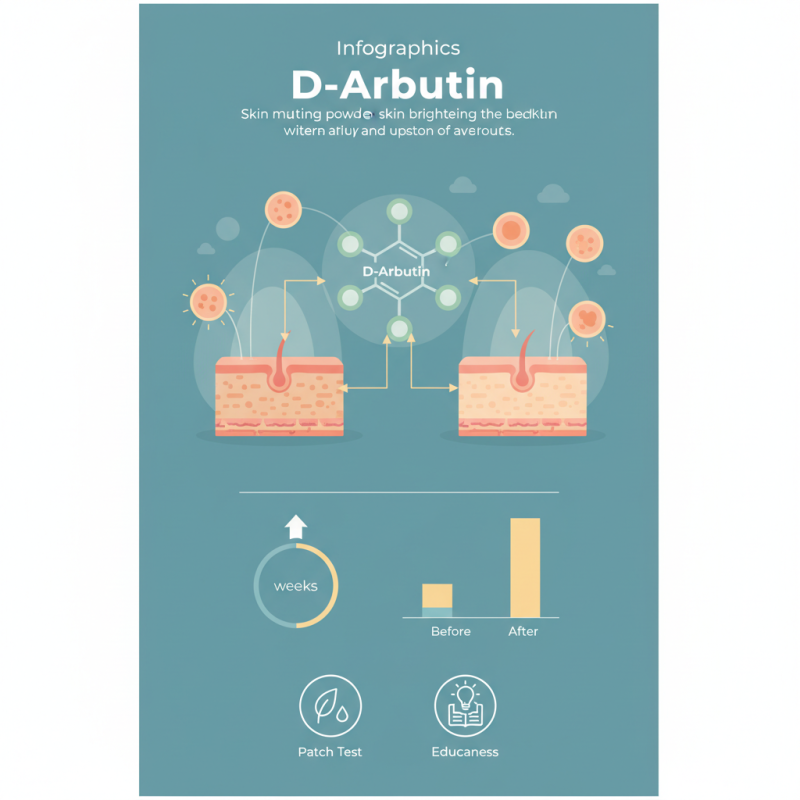
D-Arbutin powder is a naturally occurring compound derived from the bearberry plant. It is known for its skin brightening properties. Many people seek out D-Arbutin as a gentler alternative to harsher skin lightening agents. It works by inhibiting melanin production, which helps to fade dark spots and uneven skin tone.
Using D-Arbutin can be straightforward. Simply mix the powder with your favorite moisturizer or serum. When applied consistently, you may notice brighter and more even skin in a few weeks. However, results can vary. For some, it might take longer, and sensitivity to the ingredient is possible.
While D-Arbutin is generally well-tolerated, not everyone will experience the same benefits. It's important to perform a patch test before full application. Factors like skin type and environment can impact the effectiveness of D-Arbutin. If you don't see immediate results, don’t be discouraged. Crafting an effective skincare routine takes patience and experimentation.
D-Arbutin is a powerful compound known for its skin brightening effects. It primarily works by inhibiting tyrosinase, an enzyme responsible for melanin production. A study published in the Journal of Cosmetic Dermatology found that D-Arbutin can effectively reduce hyperpigmentation. In just a few weeks of regular use, skin tone can appear brighter and more even.
Using D-Arbutin requires careful consideration. It is essential to understand your skin type. This compound is generally well-tolerated, but some individuals may experience irritation. Begin with a patch test before full application. Incorporate D-Arbutin powder into your skincare routine gradually. Many users find that a concentration of 1-3% is effective without causing sensitivity.
***Tips:*** Always follow up with sunscreen during the day. D-Arbutin can make skin more susceptible to UV damage. Keep in mind that results vary; some may notice changes quickly, while others may need weeks. If skin irritation occurs, stop using the product and consult a dermatologist. D-Arbutin isn't a miracle solution; patience and consistent use are necessary for the best outcomes.
| Step | Description | Benefits | Concentration |
|---|---|---|---|
| 1 | Mix D-Arbutin powder with a suitable carrier, such as distilled water or serum. | Prepares the skin for effective absorption. | Generally 1-2% for effective results. |
| 2 | Apply the mixture onto clean skin, focusing on areas that need brightening. | Direct application enhances skin tone and reduces hyperpigmentation. | Use once or twice daily for optimal results. |
| 3 | Allow the product to absorb completely before applying other skincare products. | Maximizes the effectiveness of D-Arbutin. | N/A |
| 4 | Follow up with a broad-spectrum sunscreen during the day. | Protects the skin from UV damage that can cause further darkening. | Essential for all skin types. |
D-Arbutin is a natural derivative of hydroquinone, known for its skin brightening properties. Preparing D-Arbutin for topical application can be simple and effective. A common method involves dissolving D-Arbutin powder in a suitable solvent, like distilled water or glycerin. Aim for a concentration of about 1-3%. Always ensure the mixture is well-stirred until fully dissolved to achieve the desired consistency.
For application, apply the mixture directly to clean skin. Use a cotton pad or fingertips to apply it evenly. Target areas of hyperpigmentation or dull skin for the best results. Incorporate it into your skincare routine step after cleansing but before moisturizing. This ensures maximum absorption and effectiveness of the active ingredient.
Tips: Always conduct a patch test before full application. This helps to determine skin tolerance and prevent irritations. Consider starting with a lower concentration if you have sensitive skin. Keep in mind that results take time; consistency is key. Do not rush the process. Regular use will yield better results over a few weeks. Remember, everyone's skin is different, so observe how your skin responds to the treatment.
D-Arbutin is gaining attention for its skin-brightening effects. Proper dosage and usage are essential for safety and efficacy. The recommended dosage typically ranges from 2% to 5%. Studies show that higher concentrations can increase the potential for irritation without significant benefits. Always perform a patch test before applying it to your face.
When using D-Arbutin, mix it into your serums or creams. Apply once daily to start, gradually increasing frequency based on your skin's tolerance. Be cautious; sensitive skin might react negatively. Natural light may break down D-Arbutin, so store it in a cool, dark place. Note that the effect may take time; patience is key.
**Tip**: Consistency is crucial. Apply D-Arbutin every day for the best results. Hydration is equally important; drink plenty of water to support your skin health. Notice any adverse reactions? It may indicate that the concentration is too high or your skin type is incompatible. Taking a step back may lead to a better approach for your skin.
D-Arbutin is gaining popularity in the skincare community for its skin brightening effects. However, potential side effects should not be overlooked. Some users report skin irritation, redness, or allergic reactions. It’s crucial to perform a patch test before applying D-Arbutin to larger areas. This simple step can help identify any sensitivity you may have to this ingredient.
Hydration plays an important role when using D-Arbutin. Ensure your skin is well-moisturized before application. This strategy can help minimize irritation and enhance the effectiveness of D-Arbutin. If you notice any uncomfortable sensations, discontinue use.
While D-Arbutin can be effective, it's essential to remain aware of how your skin reacts. Not everyone will respond the same way. Take time to evaluate the results. Additionally, combining D-Arbutin with other active ingredients can lead to complications. Always consult a skincare professional for personalized advice. Pay attention to your skin's response and adjust your routine accordingly.
rbutin?
It inhibits tyrosinase, an enzyme that contributes to hyperpigmentation and uneven skin tone.
A concentration of 1-3% is often effective without causing skin sensitivity.
Not necessarily. Some individuals may experience irritation; a patch test is advised before full use.
After cleansing, apply the mixture evenly to the skin, focusing on areas with hyperpigmentation.
Results vary widely; some notice changes quickly, while others may take several weeks to see improvement.
Yes, D-Arbutin can make skin more prone to UV damage, so sunscreen is essential during the day.
If you notice irritation, discontinue use immediately and consider consulting a dermatologist for advice.
Dissolve D-Arbutin powder in distilled water or glycerin, ensuring it’s well-mixed before application.
Absolutely! Regular and patient use over several weeks is necessary for the best results.
D-Arbutin Powder is a naturally occurring compound known for its skin brightening properties. It works by inhibiting the enzyme tyrosinase, which is responsible for melanin production, thus helping to reduce dark spots and enhance overall skin tone. When used correctly, D-Arbutin can lead to a more radiant complexion.
To effectively incorporate D-Arbutin Powder into your skincare routine, it is important to prepare it properly for topical application. Recommended dosages typically range from 1% to 2%, and it should be mixed with a suitable base like a serum or cream. While generally considered safe, some users may experience mild irritation; hence, conducting a patch test before full application is advised. Overall, when used thoughtfully, D-Arbutin Powder can be a powerful ally in achieving brighter, more even skin.

Aogebio Cosmetic