The global Mushroom extract powder market is expanding beyond wellness shelves. It now serves food manufacturers, supplement brands, beverage developers, and research-focused companies. Yet supplier quality can differ sharply.
Mycologist and mushroom expert Paul Stamets has said, “Mushrooms are miniature pharmaceutical factories, with the genetic capacity to produce molecules that can benefit human health.” His observation explains why sourcing deserves careful attention. A reliable supplier should identify the mushroom species, cultivation method, extraction ratio, and active compounds. Clear documentation matters.
This guide examines the Top 10 Mushroom Extract Powder Suppliers Worldwide through practical purchasing criteria. These include ingredient traceability, laboratory testing, production capacity, certification, packaging quality, and export experience. A strong supplier should provide recent certificates of analysis, not only attractive marketing claims. Details such as beta-glucan levels, moisture content, heavy-metal screening, and microbial results can reveal real differences.
The ranking is not absolute. Buyer needs vary.
A beverage producer may prioritize solubility. A supplement company may require standardized extracts. Research buyers often demand stronger batch controls and complete technical files. Pricing also changes with species, extraction technology, order volume, and origin.
Some supplier information remains difficult to compare consistently. Public records may be incomplete, and certifications can change. That limitation deserves honesty. Readers should verify current documents, request samples, and assess each supplier before signing a contract. The right Mushroom extract powder partner combines dependable science, transparent communication, and repeatable manufacturing—not merely a polished website.
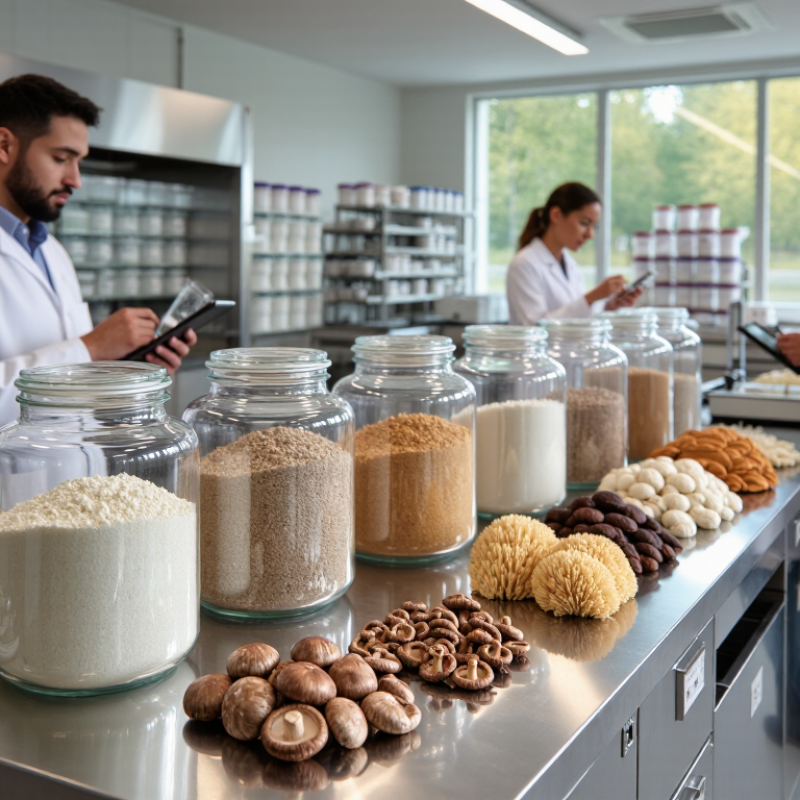
Mushroom extract powders are concentrated ingredients made from fungi, usually fruiting bodies, mycelium, or both. They differ from ordinary mushroom flour. Flour is simply dried and milled. An extract uses water, ethanol, or both to transfer selected compounds into a liquid. The liquid is then filtered, concentrated, and spray-dried into a fine powder. Some manufacturers add carriers, such as maltodextrin. The label should say so clearly.
Production begins with controlled cultivation and identity testing. FAOSTAT recorded more than 40 million tonnes of global mushroom and truffle production in recent years, showing the scale of the raw-material supply. Yet volume does not prove quality. Species authentication, moisture control, and batch traceability remain essential. They matter more when powders come from mixed substrates.
Hot-water extraction commonly targets polysaccharides, including beta-glucans. Alcohol extraction may recover other compounds, such as triterpenes. Testing should include beta-glucan content, microbial limits, heavy metals, pesticide residues, and residual solvents. AOAC methods and accredited laboratory procedures improve confidence, but they cannot correct poor cultivation practices.
A 2024 Grand View Research analysis identified functional applications as a major driver of medicinal mushroom demand. That growth also increases substitution risks. “Mushroom extract” can still be an incomplete description. Buyers should check the Latin species name, extraction ratio, plant part, solvent, carrier percentage, and certificate of analysis. Extraction ratios are not perfectly comparable across suppliers. That detail is often overlooked.
When comparing the top ten mushroom extract powder suppliers worldwide, look beyond price. Ask for the exact species, plant part, extraction ratio, solvent, and beta-glucan testing method. A reliable specification should state moisture, mesh size, carriers, and intended use. Vague claims like “high potency” deserve careful questions. Request a recent certificate of analysis from the same production batch. Check independent testing for identity, microbes, heavy metals, pesticides, and residual solvents. Small details matter.
Traceability reveals operational maturity. Suppliers should connect finished powder with cultivation records, processing dates, lot numbers, and storage conditions. Review sanitation controls, allergen handling, and change-control procedures. Video tours help, but qualified third-party audits provide stronger evidence. Ask how complaints, recalls, and out-of-specification results are documented. Silence is informative. So is defensiveness.
Evaluate samples under realistic conditions. Compare color, odor, solubility, sediment, and laboratory results across several lots. Confirm that packaging protects powder from humidity and light during transport. Record lead times, minimum order quantities, backup production, and communication terms. A low price may conceal weak testing or unstable supply. Expensive documentation can also be superficial. I would leave room for doubt and verify critical claims independently. No supplier is perfect. A useful decision comes from evidence collected batch by batch.
Top 10 Mushroom Extract Powder Suppliers Worldwide
The top ten suppliers should be judged by product performance, not only production volume. A reliable supplier identifies the mushroom species, growing medium, extraction method, and finished powder ratio. Clear labels should state beta-glucan levels, not vague polysaccharide claims. Species authentication through DNA or microscopy adds useful evidence.
Quality also depends on testing beyond the headline ingredient. Strong suppliers provide batch-specific certificates of analysis, showing moisture, microbial counts, heavy metals, pesticides, and residual solvents. Independent laboratory results are more convincing than sales statements. GMP, HACCP, and ISO systems can support consistency, but certificates alone do not prove every batch is excellent. Some certificates look impressive.
For products such as lion’s mane, reishi, cordyceps, or chaga extracts, buyers should compare fruiting-body content, substrate use, extraction temperature, and particle size. Hot-water extraction may suit beta-glucan-focused products, while dual extraction can address both water-soluble and alcohol-soluble compounds. The best suppliers explain these choices clearly and avoid unrealistic health promises.
I would also inspect traceability. Can the supplier link a finished lot to its farm, drying record, and laboratory report? Can samples remain stable after packaging and shipping? These details reveal practical experience. No supplier is perfect. Testing methods differ, and some quality data may still need independent verification before long-term purchasing. A careful comparison of ten suppliers should include sample testing, communication speed, documentation quality, and consistency across multiple lots.
Mushroom extract powder suppliers commonly offer lion’s mane, reishi, cordyceps militaris, turkey tail, chaga, maitake, and shiitake. Each species has different identifying compounds and processing needs. Lion’s mane powders may highlight hericenones or erinacines, while reishi products often report triterpenes and beta-glucans. These figures need verification.
The main formats include fruiting-body powder, mycelium powder, hot-water extract, alcohol extract, and dual extract. Hot-water processing suits many polysaccharide-rich materials. Alcohol extraction can target less water-soluble compounds, especially triterpenes. Dual extracts combine both approaches, but the label should explain the ratio. Some suppliers also sell concentrated powders marked 4:1, 8:1, or 10:1. A higher ratio does not automatically mean better quality.
Reliable suppliers provide species names, growing substrate details, extraction methods, and batch testing. Look for beta-glucan results rather than vague “polysaccharide” percentages. Heavy-metal, microbial, pesticide, and identity testing also matter, especially for wild-harvested chaga. Ask whether the powder contains carriers, starch, or added maltodextrin. The answer may change the actual extract strength. Labels can still be incomplete. A careful buyer should compare certificates of analysis, not marketing language alone. Extraction yield, source region, and storage conditions can affect color, aroma, and stability. That practical detail is easy to overlook.
When comparing mushroom extract powder suppliers worldwide, start with evidence, not polished product photographs. Ask for current certificates covering manufacturing quality, food safety, and organic status when claimed. Verify the certificate holder, facility address, scope, and expiration date through the issuing body. A logo alone proves little. Experienced buyers also request batch-specific certificates of analysis. These should show species identity, extraction ratio, moisture, microbial counts, heavy metals, and pesticide results.
Look for independent laboratory reports, clear sampling dates, and methods that match the product. DNA testing may support species identification, while chromatography can help assess marker compounds. Ask whether results apply to every batch or only one sample. That distinction is easy to miss.
Pricing needs a full landed-cost comparison. Include concentration, minimum order quantity, packaging, freight, insurance, duties, and payment terms. A low quote may become expensive after climate-controlled storage or repeated testing. Request a small pilot order before signing a large contract. Taste, solubility, odor, and shipment consistency can reveal issues documents hide.
Global distribution depends on practical reliability. Check lead times, port options, export documents, and backup inventory near major markets. Suppliers should explain recall procedures and complaint response times in writing. Speak with technical staff, not only sales representatives. My comparison sheets often score quality, transparency, cost, and delivery separately. Still, scoring is imperfect; a supplier with excellent testing may struggle during peak seasons. Recheck evidence annually and after any formula, facility, or packaging change.
Common options include lion’s mane, reishi, cordyceps militaris, turkey tail, chaga, maitake, and shiitake. Each has different marker compounds.
Suppliers may offer fruiting-body powder, mycelium powder, hot-water extract, alcohol extract, or dual extract. Formats affect compound profiles.
No. A 10:1 ratio is not automatically better than 4:1. Ask how the ratio was calculated.
It should show the species, growing substrate, extraction method, ratio, and batch information. Check for carriers, starch, or added maltodextrin.
Request species identity, beta-glucan levels, moisture, microbial counts, heavy metals, and pesticide results. Vague polysaccharide claims need caution.
Check the certificate holder, facility address, testing scope, and expiration date. Confirm details with the issuing organization.
Calculate the full landed cost, including concentration, minimum order size, packaging, freight, insurance, duties, and payment terms.
A small shipment can reveal taste, solubility, odor, packaging quality, and delivery consistency. Documents may hide practical problems.
Review lead times, port options, export documents, nearby backup inventory, recall procedures, and complaint response times.
No. Scoring is helpful but imperfect. Strong testing may still come with seasonal delays or limited inventory. Recheck evidence annually.
This guide explores how Mushroom extract powder is produced from carefully selected fruiting bodies or mycelial biomass through processes such as drying, grinding, hot-water extraction, and concentration. It explains how these methods can influence potency, solubility, flavor, and the preservation of naturally occurring compounds. Readers will also learn how to assess suppliers by reviewing raw-material sourcing, manufacturing controls, batch consistency, independent laboratory testing, and transparent documentation.
The article compares ten leading supplier types worldwide according to product quality, extraction formats, mushroom species, certifications, pricing, and international distribution capabilities, without promoting any specific brand. It discusses common options such as single-species powders, blended formulas, water extracts, and dual-extraction products, while highlighting the importance of testing for identity, purity, contaminants, and accurate labeling. By considering quality standards, minimum order quantities, packaging, lead times, and customer support, buyers can make more informed decisions when selecting a reliable supplier for commercial or research-related needs.

Aogebio Cosmetic