China Top 10 Beta Glucan Yeast Manufacturers?

Time:2026-10-03 Author:Sienna
0%

China’s beta-glucan industry has expanded across nutrition, functional foods, animal feed, and personal care. This article introduces ten manufacturers associated with Beta Glucan yeast production and supply. It focuses on practical signals, not attractive claims alone.

A reliable manufacturer should explain its yeast strain, fermentation process, drying method, and extraction technology. Product documents should include beta-glucan assay results, microbiological testing, heavy-metal limits, allergen statements, and a current certificate of analysis. Factory details matter too. Look for traceable raw materials, controlled fermentation tanks, clean processing rooms, and stable batch records. Export experience can also reveal whether packaging survives long-distance transport.

However, a “top ten” list cannot represent every capable Chinese supplier. Rankings may change as capacity, certifications, and product quality develop. A supplier may look strong on paper, yet provide weak technical support during sampling. That risk deserves attention. Buyers should request recent samples, compare test methods, and verify whether the reported content refers to total beta-glucan or a specific fraction. Independent laboratory testing remains valuable, especially for large orders.

The manufacturers discussed here are presented as research candidates, not automatic choices. Their suitability depends on application, dosage form, target market, and compliance requirements. A food-grade powder may not fit a supplement formula without further documentation. Careful comparison can reduce surprises. It can also support better decisions when negotiating specifications, lead times, minimum order quantities, and long-term supply plans.
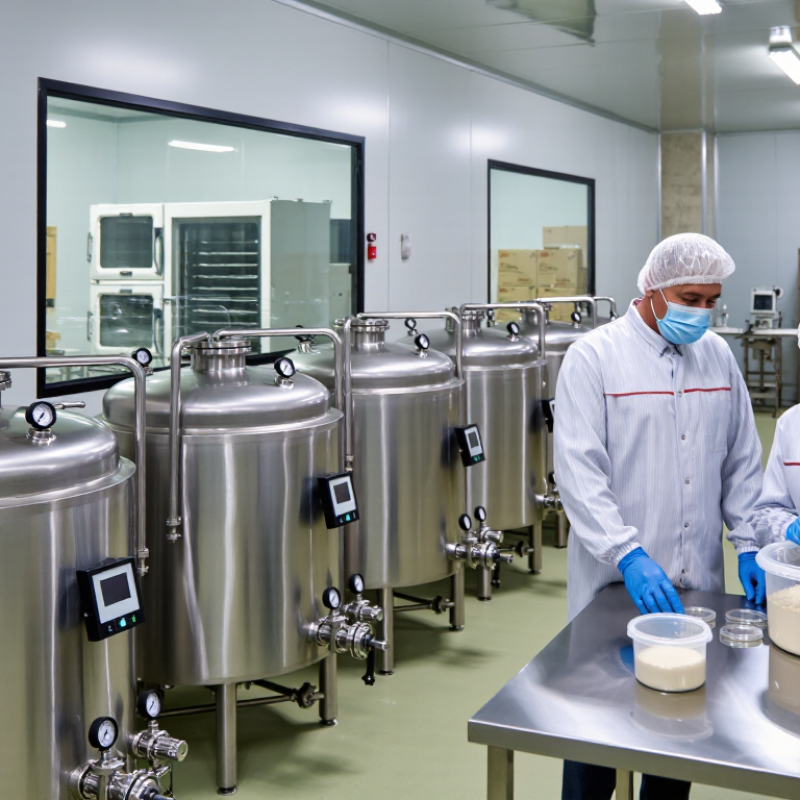
China Top 10 Beta Glucan Yeast Manufacturers?

What Is Beta Glucan Yeast and How Is It Used?

Beta glucan yeast is a functional ingredient obtained mainly from the cell walls of Saccharomyces cerevisiae. It is not the same as active baking yeast. Manufacturers separate, wash, and dry the cell-wall material, preserving beta-1,3/1,6-glucan structures. These compounds are non-digestible fibers with a distinctive branched shape.

Its use depends on purity, particle size, and the intended product. Supplement makers may place it in capsules, powders, or chewable tablets. Food producers can add it to nutrition bars, beverages, and powdered blends. It may also appear in animal-feed formulas and selected personal-care products. The texture matters. Poorly dispersed powder can settle at the bottom of a drink, like fine flour in water.

Quality assessment requires more than reading “high content” on a specification sheet. Buyers should check the glucan assay method, moisture, microbial limits, heavy-metal testing, allergen statements, and traceability records. A reliable manufacturer should provide batch documents and explain its extraction process clearly. Independent laboratory verification is useful, especially for large orders.

Evidence around immune-related benefits is promising but not universal. Results can vary with dose, glucan structure, and study design. I would avoid treating every yeast glucan as interchangeable. That assumption is convenient, but scientifically weak. Product claims should remain measured, and users with medical conditions should seek professional advice.

How to Evaluate China’s Beta Glucan Yeast Manufacturers

Choosing among China’s top beta glucan yeast manufacturers requires more than comparing prices. Start by checking the yeast strain, raw material origin, and production route. Ask whether beta glucan levels are measured by a recognized method, not only stated on a sales sheet. A reliable supplier should provide recent certificates of analysis, batch numbers, microbiological results, and heavy metal testing. Request samples from different production batches. Consistency matters.

Visit the facility when possible, or arrange an independent audit. Observe material storage, cleaning records, equipment maintenance, and packaging controls. The manufacturer should explain its traceability system from incoming yeast to finished powder. Confirm whether the factory follows suitable food or supplement quality standards for your target market. Clear answers matter. Vague promises do not. Technical staff should discuss solubility, particle size, moisture, dosage support, and stability data without exaggeration. Customer references can also reveal delivery accuracy and complaint handling.

Tips: Compare at least three suppliers using the same checklist. Request sealed samples and test them through an independent laboratory. Review the full specification, not just beta glucan percentage. A polished certificate is not proof of stable production. Communication quality is useful evidence, but it can still mislead. I would also examine small details, such as label accuracy and response time. No factory is perfect. Leave room for retesting, unexpected delays, and your own evaluation mistakes.

Profiles of China’s Top 10 Beta Glucan Yeast Manufacturers

China’s top ten beta glucan yeast manufacturers represent different strengths, not identical business models. One profile focuses on high-purity yeast cell-wall separation. Another emphasizes cost-efficient production for feed applications. A third supplies food-grade powder with neutral color and mild taste. The strongest profiles show clear raw-material sources, stable fermentation records, and batch-level testing.

Several manufacturers operate larger facilities with controlled drying rooms and metal detection systems. Others remain smaller but offer flexible packaging, private-label support, and faster technical communication. A reliable producer should provide beta-glucan assay results, moisture limits, microbiological data, and allergen statements. It should also explain whether testing uses enzymatic analysis or another validated method. Details matter.

Some profiles stand out through traceability from yeast cultivation to sealed bags. Others invest in research on immune-support ingredients, animal nutrition, or functional foods. Regional logistics can reduce delivery pressure, although export experience varies. Buyers should inspect certificates, audit reports, sample consistency, and storage instructions. A polished specification sheet is not enough. Even experienced manufacturers may show uneven particle size between batches. That weakness deserves discussion, not concealment. The best evaluation compares technical evidence, communication quality, production scale, and the manufacturer’s ability to correct problems openly.

China’s Top 10 Beta-Glucan Yeast Manufacturers: Industry Reference Profile

This chart summarizes commonly reported technical indicators for commercial yeast beta-glucan products and yeast cell-wall materials. The values are industry reference figures rather than company-specific or brand-specific data. Yeast beta-glucan is mainly associated with β-1,3/β-1,6 glucan structures, while mannan, protein, moisture, ash, and chitin are common quality-control dimensions.

Comparing Products, Production Capacity, and Certifications

China Top 10 Beta Glucan Yeast Manufacturers?

A credible top-ten comparison should examine more than quoted prices. Grand View Research estimated the global beta-glucan market at about US$1.2 billion in 2023, with continued growth through 2030. This demand increases pressure on Chinese manufacturers to prove consistent yeast strain selection, extraction yield, and microbiological control.

Production capacity matters. Compare stated annual output, reactor volume, drying methods, and batch traceability. Spray-dried powder may suit functional foods, while finer particles support beverage applications. Some factories report capacity in broad ranges, not verified utilization. That weakens direct ranking. Request recent batch records and third-party test reports.

Certifications separate capable suppliers from attractive websites. Check ISO 22000 or FSSC 22000, HACCP, GMP, and valid halal or kosher documentation where required. The MarketsandMarkets Beta-Glucan Market report identifies food, dietary supplement, and animal nutrition as major application areas. Each requires different specifications. A supplement-grade product may need beta-glucan purity, moisture, heavy-metal, yeast, and mold data. Ask for the testing method, not only the result.

Look closely.

An experienced audit should review sanitation zoning, allergen controls, warehouse temperature, and recall procedures. Independent laboratories can confirm identity and purity before shipment.

Certifications also expire, and certificates may cover only one facility. That detail is often missed. A practical scorecard should weight verified capacity, specification stability, certification scope, and delivery history. Public information remains incomplete, so any “top ten” list should be treated as a screening tool, not a final purchasing decision.

How to Select a Reliable Chinese Beta Glucan Yeast Supplier

China Top 10 Beta Glucan Yeast Manufacturers?

How to Select a Reliable Chinese Beta Glucan Yeast Supplier

A reliable supplier should provide more than a product brochure. Request a current specification sheet, certificate of analysis, safety data, and production traceability records. Check the yeast source, beta-glucan content, extraction process, carrier materials, moisture, microbial limits, and heavy-metal results. Testing methods matter. Two suppliers may report different values because their assay procedures differ.

Ask for a small, sealed sample from a recent batch. Compare its color, odor, dispersibility, and laboratory results with the stated specification. A professional supplier should explain batch variation without avoiding difficult questions. Visit the facility when possible, or arrange a documented remote audit. Review raw-material storage, cleaning controls, packaging areas, and lot coding. Clear answers are valuable.

Certification alone is not enough. Verify its scope, issuing organization, expiry date, and product coverage. Confirm whether the supplier supports your target market’s food, feed, cosmetic, or supplement requirements. Export experience can help, but it does not replace technical evidence. Check response times, complaint procedures, minimum order quantities, and replacement policies before signing. A polished website proves little. Some suppliers communicate well but lack consistent testing; others have strong factories yet weak documentation. That is where careful comparison becomes necessary. Reliability is built through records, samples, audits, and honest communication.

China Top 10 Beta Glucan Yeast Manufacturers? - How to Select a Reliable Chinese Beta Glucan Yeast Supplier

An anonymized supplier-evaluation matrix based on commonly used technical, regulatory, quality, and procurement criteria for yeast-derived beta-glucan. Supplier-specific claims should be verified with current documentation, samples, and audits.

No. Evaluation Dimension Practical Benchmark for a Reliable Supplier Documents or Checks to Request Common Warning Signs
1 Raw Material Source Clearly identified food-grade yeast source, controlled fermentation or processing route, and documented traceability from incoming raw material to finished product. Raw-material specification Traceability record Process flow chart Vague source description, inconsistent origin information, or no batch traceability.
2 Beta-Glucan Content A clearly defined assay method and a consistent specification. Commercial yeast beta-glucan powders commonly use a high-purity specification, but the exact level depends on extraction and purification. Product specification Third-party COA Assay method “High purity” claims without an analytical method, test result, or acceptance range.
3 Analytical Testing Routine testing should cover beta-glucan content, moisture, ash, protein, microbiological limits, heavy metals, and relevant contaminants. Recent COA Testing protocol Laboratory qualification COAs with identical values for every lot, missing test dates, or results issued only on request.
4 Food Safety System A documented food-safety management system, hygienic production controls, allergen management, pest control, sanitation procedures, and a product recall process. HACCP plan GMP records Food-safety certificate Expired certificates, certificates covering a different facility, or no corrective-action records.
5 Regulatory Documentation Product documentation should match the destination market, intended use, dosage format, and regulatory classification. Claims must not exceed the approved use of the ingredient. Technical data sheet Safety data sheet Regulatory statement Unsupported health claims, incomplete ingredient declarations, or generic documents copied from another product.
6 Physical and Functional Properties Stable appearance, odor, solubility or dispersibility appropriate to the application, controlled particle size, and consistent performance in beverages, capsules, powders, or functional foods. Application sample Particle-size data Solubility test Large lot-to-lot variation, strong off-odor, poor dispersion, or no application guidance.
7 Batch Consistency At least three commercial or pilot batches should show comparable assay, moisture, microbiological, and physical-property results before approval. Three-batch COA set Stability data Retain-sample policy Only one sample is offered, production samples differ from sales samples, or no retained-batch system exists.
8 Manufacturing Capacity The supplier should disclose realistic monthly capacity, lead time, production scheduling, packaging options, and contingency arrangements without overstating capacity. Factory audit Capacity statement Production schedule Unclear factory location, excessive dependence on subcontractors, or delivery promises without capacity evidence.
9 Packaging and Shelf Life Moisture-resistant food-grade packaging, clearly marked lot numbers, manufacturing and expiry dates, recommended storage conditions, and stability support for the claimed shelf life. Packaging specification Stability report Storage instruction Unsealed inner bags, missing lot identification, unclear shelf-life basis, or poor humidity control.
10 Commercial Reliability Transparent quotation, written product specifications, defined minimum order quantity, responsive technical support, clear Incoterms, and a documented complaint-handling procedure. Formal quotation Quality agreement Complaint procedure Frequent specification changes, unexplained price differences, slow responses, or refusal to sign agreed quality terms.

FAQS

What is beta glucan yeast?

It is a functional ingredient from yeast cell walls. It contains non-digestible beta-1,3/1,6-glucan fibers. It is not active baking yeast.

How is beta glucan yeast produced?

Manufacturers separate, wash, and dry yeast cell-wall material. This process preserves its branched glucan structure. Processing details can affect quality.

Where is beta glucan yeast used?

It may appear in capsules, powders, chewable tablets, nutrition bars, and beverages. It can also support animal-feed and personal-care formulas. The final use depends on purity and specifications.

Why do particle size and dispersion matter?

Poorly dispersed powder may settle in a drink like fine flour in water. Particle size can affect texture, appearance, and handling. A smooth-looking sample is not always a stable one.

Which quality documents should buyers request?

Request the glucan assay method, moisture data, microbial limits, and heavy-metal results. Also check allergen statements, batch numbers, and traceability records. A high percentage alone proves little.

How can buyers evaluate manufacturers in China?

Compare at least three suppliers with the same checklist. Review raw-material origin, yeast strain, production route, and recent certificates. Independent laboratory testing is wise, especially for larger orders.

What should a factory audit examine?

Check material storage, cleaning records, equipment maintenance, drying rooms, and packaging controls. Follow traceability from incoming yeast to sealed bags. Clear answers matter.

Are all yeast beta glucans interchangeable?

No. Glucan structure, dose, purity, and testing methods can differ. Evidence for immune-related effects is promising, but results are not universal. That assumption is too convenient.

What practical problems can occur between batches?

Particle size, moisture, or color may vary unexpectedly. Delivery delays can also happen. Retesting is sensible, even when paperwork looks polished.

What should users consider before taking products containing it?

Product claims should remain measured. People with medical conditions should seek professional advice. More testing is sometimes needed.

Conclusion

Beta Glucan yeast is a functional ingredient derived from yeast cell walls and valued for its dietary, nutritional, and immune-supporting properties. It is commonly used in food, beverages, animal nutrition, dietary supplements, and personal care formulations. This article explains how Beta Glucan yeast is produced, processed, and applied, while outlining the key factors for evaluating Chinese manufacturers, including raw material quality, extraction technology, product consistency, production capacity, testing procedures, and export experience.

It also presents a practical framework for comparing suppliers according to beta-glucan content, purity, formulation options, certifications, quality-control systems, packaging, lead times, and technical support. Rather than focusing only on price, buyers should assess traceability, documentation, batch stability, communication, and the supplier’s ability to meet specific regulatory and application requirements. By using a structured evaluation process and requesting samples, test reports, and clear commercial terms, international customers can select a reliable Chinese Beta Glucan yeast supplier for long-term cooperation.


Sienna

Sienna

Sienna is a skilled marketing professional with a deep expertise in our company’s core products and services. With a passion for innovation and detail, she plays a pivotal role in crafting insightful blog posts that not only highlight the unique features of our offerings but also provide valuable......