For global feed, pet-food, and aquaculture buyers, China has become a practical sourcing base for Amino acid premix. Yet a supplier list is not enough. The real question is whether each factory can deliver stable formulas, clean documentation, and repeatable quality. Amino acid premix combines selected amino acids with carriers, vitamins, minerals, or functional ingredients. Its value depends on species, life stage, dosage, and storage conditions. A poultry formula may not suit shrimp. A calf formula may perform poorly in a hot warehouse. That sounds obvious. It is often missed.
This guide examines China’s top Amino acid premix suppliers through an evidence-based purchasing lens. It considers manufacturing experience, formulation capability, batch testing, traceability, export service, and technical support. Dr. Hans H. Stein, a recognized swine nutrition researcher, has emphasized, “The goal is to meet amino acid requirements, not simply maximize crude protein.” That principle matters when comparing quotations. A lower price can hide weaker assay control, unsuitable carriers, or inconsistent particle size. Buyers should request recent certificates of analysis, product specifications, sample results, and clear allergen statements. They should also confirm facility certifications and destination-market compliance. No brochure replaces a retained sample and a documented trial.
The strongest supplier is not always the largest. It is the partner that explains limitations before signing. Still, this comparison has boundaries. Public information can change, and capabilities may differ by factory, product line, and production season. Independent verification remains necessary. Readers should treat rankings as a starting point, then audit the details themselves. Transparent evidence helps global buyers reduce procurement risk and choose an Amino acid premix supplier with practical confidence.
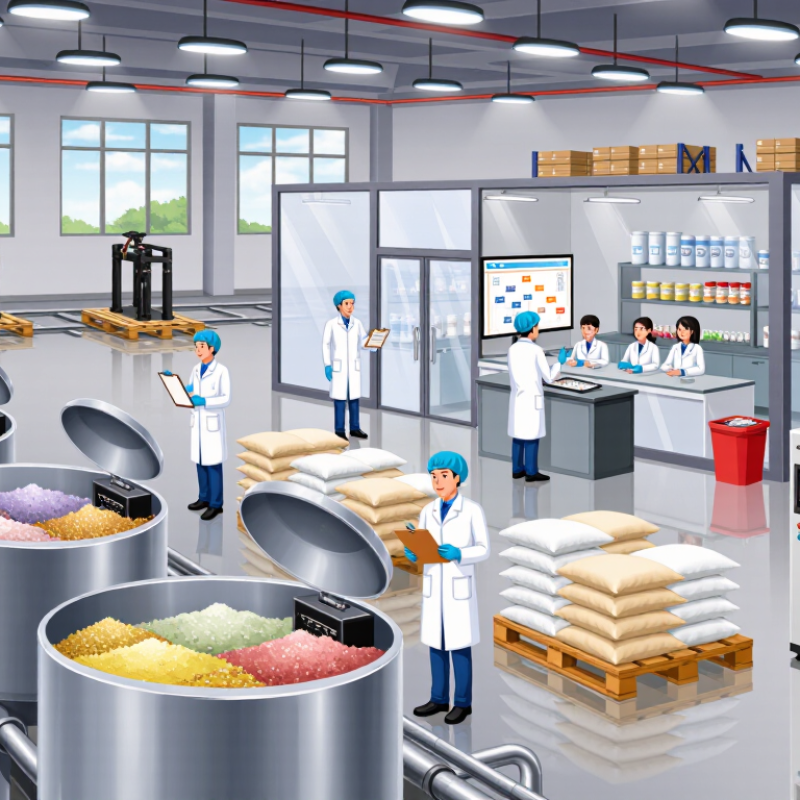
An amino acid premix is a measured blend of essential amino acids, often prepared for animal feed or nutrition formulas. It helps correct dietary gaps and supports protein use, growth, and production efficiency. The value is not simply the ingredient list. Each amino acid must be accurately dosed, evenly mixed, and protected from moisture during storage.
In practical sourcing, buyers should examine purity, solubility, carrier materials, and batch consistency. A reliable supplier should provide a clear specification sheet, certificate of analysis, traceability records, and suitable packaging details. Manufacturing conditions also matter. Heat, humidity, and long transport can affect product stability. A low price may look attractive, but poor dispersion can create uneven nutrition. That mistake is expensive. No premix fits every formula, either. Species, age, diet, dosage, and local feed standards must be reviewed by a qualified nutritionist.
Tips: Ask for recent test data, not only a brochure. Confirm the recommended inclusion rate and shelf life. Request a small sample for mixing and storage checks. Inspect whether the powder cakes after several days in a warm, humid room. It is a simple test, but it can reveal practical weaknesses. Also compare packaging, lead time, and complaint handling before placing a larger order.
An amino acid premix is a standardized blend of individual amino acids used to support nutritional balance in food, feed, and specialized formulations. The chart shows the World Health Organization, Food and Agriculture Organization, and United Nations University adult reference pattern for essential amino acid requirements.
Reference values are expressed in milligrams per kilogram of body weight per day. Higher values indicate a greater daily reference requirement, helping global buyers evaluate formulation priorities and premix specifications. Source: WHO/FAO/UNU, Protein and Amino Acid Requirements in Human Nutrition, 2007.
China Top Amino Acid Premix Suppliers for Global Buyers?
China’s amino acid premix supplier market is divided into several practical layers. Large manufacturers often produce individual amino acids and blend them in dedicated facilities. Specialized formulators combine amino acids with vitamins, minerals, or carriers for animal nutrition and food applications. Trading companies add another layer, especially for smaller overseas buyers.
A supplier may describe itself as a manufacturer, yet outsource part of its blending process. This is not automatically a problem. Buyers should verify production addresses, batch records, quality certificates, and testing responsibilities. A factory visit can reveal important details, such as separate storage areas, calibrated scales, dust control, and clearly labeled raw materials. Paperwork alone is not enough.
Market access also depends on the destination country. Suppliers with export experience usually understand labeling rules, certificates of analysis, allergen statements, and shipment documentation. However, compliance support varies widely. Some companies provide strong technical files but limited formulation advice. Others offer flexible customization but weaker traceability. That trade-off deserves careful review. Buyers should request recent test reports, sample batches, stability data, and written specifications before signing a long-term contract. Price matters, but inconsistent particle size or amino acid concentration can create costly production problems. The market is capable and competitive, though its structure is not always transparent.
Global buyers should assess amino acid premix suppliers through documented quality systems, not attractive specifications alone. A valid GMP, HACCP, ISO 22000, or FSSC 22000 certificate shows process control. It does not guarantee every batch is suitable for your application. Check the certificate scope, issuing body, expiry date, and covered production site. The details matter.
Request a recent certificate of analysis for each premix lot. It should identify amino acid potency, moisture, microbial limits, heavy metals, and batch number. Testing methods should be stated clearly and linked to recognized laboratory procedures. Ask whether results come from internal laboratories or independent facilities. Both can work, but weak verification creates uncertainty.
Review sample retention, calibration records, and the supplier’s deviation procedure. Small gaps often reveal larger control problems.
Traceability should reach raw material suppliers, blending records, packaging, and shipment conditions. For international orders, confirm allergen controls, labeling accuracy, shelf-life evidence, and storage requirements. A supplier should provide stability data under realistic temperature and humidity conditions. This is where reviews can become too optimistic. Many evaluations focus on certificates and overlook warehouse handling. I would also request a pilot batch before regular purchasing. Compare test results, mixing uniformity, odor, color, and performance in your own process. No document replaces practical verification. Experienced buyers can still miss a risk when specifications look perfectly organized.
Global buyers should compare amino acid premix suppliers with evidence, not attractive quotations. The OECD-FAO Agricultural Outlook 2024–2033 projects global meat production to rise by about 12% by 2033. This growth increases demand for consistent feed nutrition. China’s Ministry of Agriculture reported approximately 321.6 million tonnes of industrial feed production in 2023. That scale matters, but it does not prove every supplier performs equally.
Ask for evidence. Request recent certificates of analysis for assay, moisture, particle size, and heavy metals. Check whether each batch has a traceable lot number and production date. A reliable supplier should explain its carrier material, mixing sequence, packaging protection, and storage limits. ISO 22000 or HACCP systems are useful, but valid certificates need scope and expiry checks. Do not accept a certificate as a substitute for testing.
Then test it. Compare three samples under the same laboratory method. Measure mixing uniformity, odor, flowability, and stability after transport. A supplier offering a lower price may use different carriers or weaker packaging. That difference can appear as dust, segregation, or reduced potency in a feed mill. Confirm minimum order quantity, lead time, export documents, and complaint response before signing. I would also request a pilot shipment. It adds time, admittedly, but supplier comparisons based only on paper often fail in real production. Official statistics show market scale; independent batch testing shows practical reliability.
China Top Amino Acid Premix Suppliers for Global Buyers: What Steps Complete a Reliable International Purchase?
A dependable purchase starts with a technical specification, not a supplier list. Define target amino acid levels, carrier materials, moisture limits, particle size, packaging, and intended animal species. The WHO, FAO, and UNU 2007 expert report provides reference amino acid patterns for assessing nutritional balance. Use those values as a formulation checkpoint, not as a substitute for field trials.
Request a recent certificate of analysis, full ingredient declaration, batch number, manufacturing date, and shelf-life evidence. Match each result with an independent laboratory test. ISO 22000 remains a useful food-safety framework, while Codex General Principles of Food Hygiene supports documented hazard controls and traceability. A certificate alone proves little. Inspect the production site, review calibration records, and test a sealed pre-shipment sample.
Check export documents before payment. Confirm the HS classification, origin certificate, packing list, commercial invoice, and agreed Incoterm. UN Trade and Development reports continue to highlight documentation and border procedures as major sources of trading cost. Small errors can delay a container. I learned this the hard way. Also verify pallet strength, moisture barriers, temperature exposure, and local import rules. The cheapest quotation may exclude testing, insurance, or port charges. Ask for a complete landed-cost calculation, then record every assumption in the purchase contract.
| Step | Purchase Stage | Buyer Action | Required Data or Documents | Key Verification Points | Typical Timing | Recommended Output |
|---|---|---|---|---|---|---|
| 1 | Define the product requirement | Specify the target animal species, application, dosage form, pack size, annual volume, destination country, and required delivery term. | Product brief, technical specification, target quantity, packaging requirement, and intended use. | Confirm whether the premix is for feed, food, laboratory, or another regulated application. | 1–3 business days | Approved buyer specification |
| 2 | Check the amino acid composition | Compare the declared inclusion level and concentration of each amino acid in the premix. | Ingredient list, guaranteed analysis, formulation sheet, and tolerance limits. | Review common amino acids such as lysine, methionine, threonine, tryptophan, valine, isoleucine, and leucine where relevant to the application. | 2–5 business days | Comparable technical specification |
| 3 | Screen supplier qualifications | Request evidence of manufacturing capability, quality management, export experience, and product traceability. | Quality manual, factory profile, production-flow description, certificates, audit questionnaire, and reference markets. | Check that certificates are valid, applicable to the production site, and relevant to the purchased product category. | 3–10 business days | Shortlist of qualified suppliers |
| 4 | Verify food or feed safety controls | Assess controls for contamination, allergens, heavy metals, microorganisms, foreign materials, and prohibited substances. | HACCP plan or equivalent risk assessment, sanitation procedure, allergen statement, contaminant-control policy, and recent test results. | Confirm that limits match the destination country and the final-use regulations. | 3–7 business days | Documented safety review |
| 5 | Request and test samples | Obtain representative samples from the proposed production lot and arrange internal or independent laboratory testing. | Sample request, sample identification, certificate of analysis, test method, and chain-of-custody record. | Compare assay, moisture, appearance, particle size, microbiology, and contaminants with the agreed specification. | 7–21 calendar days | Sample approval report |
| 6 | Confirm regulatory and customs requirements | Check import eligibility, labeling rules, registration requirements, and customs classification before placing the order. | Commercial invoice data, packing information, product label, safety data sheet where applicable, certificate of origin, and tariff classification information. | Verify the correct HS classification with the importer, customs broker, or competent authority; classification can vary by formulation and use. | 3–10 business days | Destination-market compliance checklist |
| 7 | Evaluate commercial terms | Compare the total landed cost rather than only the product quotation. | Quotation, currency, minimum order quantity, payment terms, Incoterm, freight estimate, insurance, duties, and local charges. | Use the same Incoterm and delivery destination when comparing quotations. Clarify whether testing, documentation, and palletization are included. | 2–5 business days | Like-for-like landed-cost comparison |
| 8 | Finalize packaging and shelf life | Approve the packaging format, batch coding, storage conditions, and labeling language. | Packaging specification, label artwork, shelf-life statement, storage instructions, pallet plan, and net/gross weight details. | Check moisture protection, tamper evidence, traceability coding, and compatibility with the destination climate. | 2–7 business days | Approved packaging and labeling file |
| 9 | Issue the purchase order and quality agreement | Place the order only after technical, regulatory, and commercial terms are documented. | Purchase order, signed specification, quality agreement, approved sample reference, payment schedule, and delivery schedule. | Include acceptance criteria, non-conformance handling, change-notification requirements, and responsibility for rejected goods. | 2–5 business days | Contractually controlled purchase |
| 10 | Control production and pre-shipment release | Request batch information and review quality results before shipment. | Batch number, production date, certificate of analysis, inspection report, packing list, invoice, and shipment photographs if required. | Ensure the released lot matches the approved specification, sample, quantity, packaging, and remaining shelf life. | 7–30 calendar days, depending on formulation and order volume | Pre-shipment release approval |
| 11 | Arrange international logistics | Coordinate freight booking, export customs clearance, insurance, and document transfer with the logistics provider. | Bill of lading or air waybill, commercial invoice, packing list, certificate of origin, insurance certificate, and required health or conformity documents. | Confirm transport conditions, container cleanliness, moisture protection, document consistency, and consignee details. | Transit time varies by route and transport mode | Shipment ready for customs clearance |
| 12 | Receive, inspect, and close the order | Inspect the shipment at arrival and retain samples for traceability and complaint investigation. | Receiving record, quantity check, packaging inspection, arrival test report, deviation report, and retained-sample record. | Check seal condition, pallet and bag integrity, batch identity, net weight, odor, appearance, and required documentation. | 1–5 business days after arrival | Goods-receipt approval and supplier scorecard |
Note: Timing is indicative and depends on formulation complexity, sample testing, order volume, destination-country requirements, production capacity, and transport route. Final specifications, permissible contaminant limits, labeling rules, and customs classification should be confirmed with the applicable competent authorities and qualified import professionals.
It is a measured blend of essential amino acids for animal feed or nutrition formulas. It helps fill dietary gaps.
Uneven dosing can create inconsistent nutrition across feed batches. Small errors may affect growth, protein use, and production efficiency.
Request a specification sheet, recent certificate of analysis, traceability records, and packaging details. Check lot numbers and production dates.
Review assay, moisture, particle size, heavy metals, solubility, and batch consistency. A brochure is not enough.
Request a small sample and mix it under normal production conditions. Check flowability, odor, dust, and uniformity.
Yes. Heat and humidity may reduce stability or cause caking. Inspect the powder after several days in a warm, humid room.
No. Cheaper materials may use weaker packaging or different carriers. The result may be dust, segregation, or poor dispersion.
No. Species, age, diet, dosage, and local feed standards must be reviewed. A general formula may be unsuitable.
Test three samples using the same laboratory method. Compare documents, pilot shipments, lead times, minimum orders, and complaint handling.
Not completely. Verify the certificate’s scope and expiry date. Independent batch testing still matters. Paperwork can look reassuring.
Amino acid premix is a carefully formulated blend of essential and functional amino acids designed to support balanced nutrition, consistent product performance, and efficient formulation across feed, food, and related applications. China’s supplier market includes manufacturers with different production capacities, technical specialties, customization options, and export experience. Global buyers should therefore look beyond price and evaluate ingredient traceability, formulation accuracy, testing procedures, manufacturing controls, documentation, and compliance with applicable destination-market requirements.
A reliable comparison should consider product consistency, batch-to-batch quality, packaging, minimum order quantities, lead times, technical support, communication, and after-sales service. Buyers can reduce purchasing risks by clearly defining specifications, requesting representative samples and test reports, confirming production and inspection processes, and reviewing export documentation before placing an order. A well-managed international purchase should also include agreed payment terms, shipping responsibilities, quality acceptance criteria, and a practical process for handling discrepancies. This structured approach helps buyers select a capable supplier and establish a stable, transparent, and sustainable supply relationship.

Aogebio Cosmetic